Think about Mozart… What is the first thing that comes to your mind? Well, let's see: "Austrian composer", "one of the greatest figures of classical music of all time", "author of famous operas such as The Marriage of Figaro (1786) and Don Giovanni (1787)", "composer of some of the most beautiful and sophisticated piano concertos ever written, such as Piano Concerto No. 17 in G Major, K. 453, and Piano Concerto No. 20 in D Minor, K. 466". Yes, many musicians and piano students who are fond of Mozart's works probably know that he was undoubtedly one of the most remarkable composers and pianists of the Classical era. But what many people sometimes don't realize is that Mozart started playing and composing at a remarkably early age and was recognized as a child prodigy. Still wondering about the pieces he composed as a child? Well, let's take a look at the very piece that inspired this article!
Pieces to learn
How to play Allegro in F Major, K. 1 c by Wolfgang Amadeus Mozart
Explore one of Mozart’s earliest compositions and discover how to play its lively melody with clarity, balance, and expression.
Every child is born blessed with a vivid imagination.
Composed at just five years old
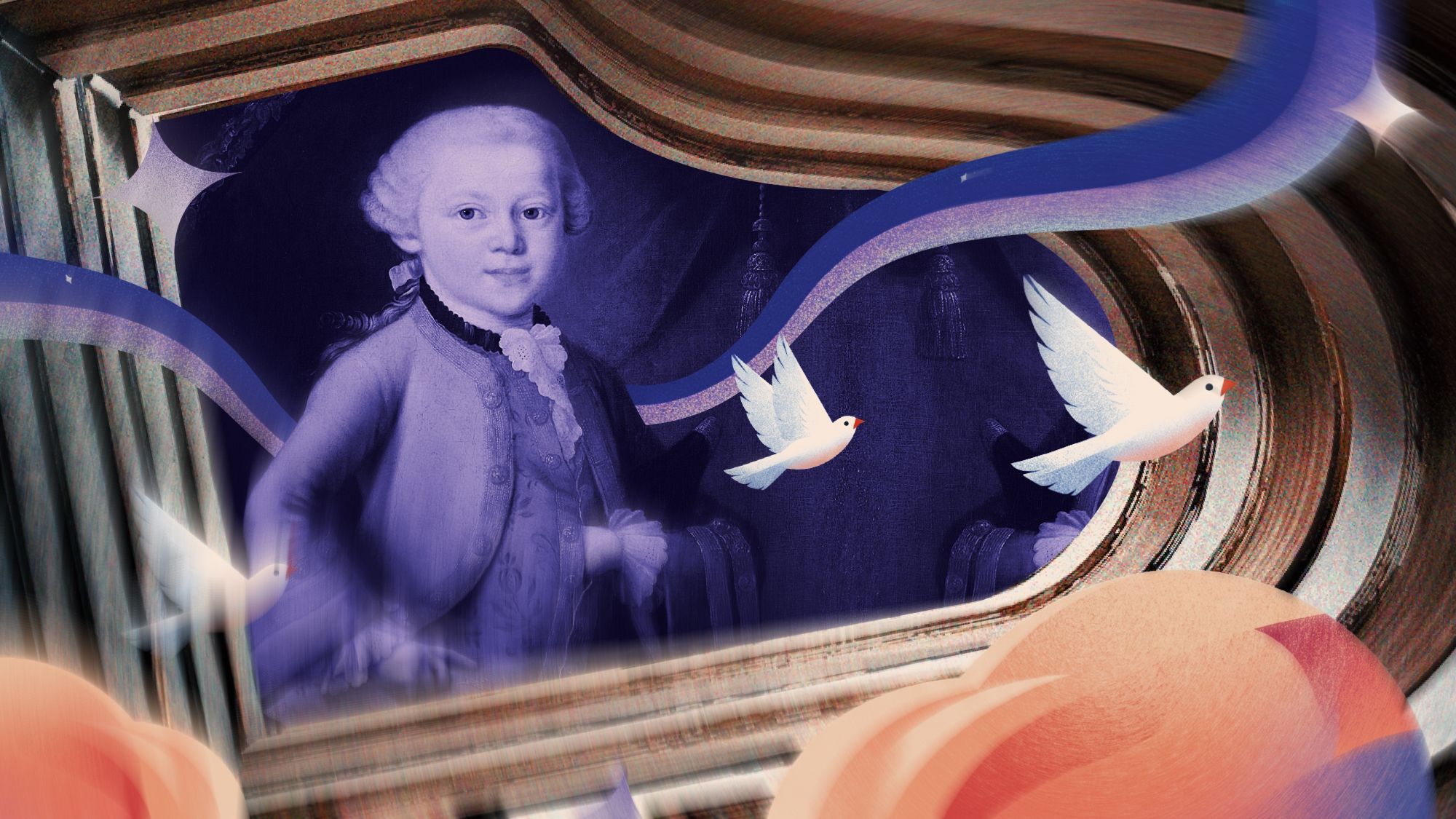
It is fascinating to think about little Mozart composing such a remarkable piece when he was only five years old! It was obviously an extraordinary gift, but it also makes us reflect upon the circumstances surrounding his musical development: his personality, his discipline, his perseverance, and the support of his father, Leopold Mozart, who recognized the extraordinary abilities of his son. This support was crucial in shaping Mozart's musical training, even though later in life, father and son had conflicts, and Mozart himself sought greater independence and autonomy, both professionally and personally.
Discipline, not just talent
Conflicts aside, my point is discipline. One single word. And yes, my dear readers, discipline can change not only a life, but we can also see its reflections in future generations. The fact that Mozart was only a child was not treated as an obstacle. On the contrary, discipline and training helped shape the little Mozart and prepare him for the brilliant career that followed. So, what about being inspired by his perseverance - yes, perseverance, because that is also part of what makes a genius! It was not simply "talent". Please don't misunderstand the word "gift". Talent needs to be nurtured, developed, and worked on. Think about that when struggling with your studies: take a break, work hard, and move forward. Always! So… Excited to learn how to play Allegro in F Major, K. 1 c? Me too!
How to play Allegro in F Major
To start off, keep in mind that Mozart's pieces are not only about clear melodies, elegance, and balance. His works also call for simplicity, clarity, and creativity. I do hope you enjoy the process while approaching this bright, 24-measure piece, originally written for harpsichord. Let's get started! First, understand the form: notice the two main sections, their repetitions, and how they create the rounded binary form. Practice each section separately, breaking it into small chunks and focusing on accuracy before gradually increasing the tempo (don't forget the metronome!). Technically, avoid unnecessary tension by keeping the fingers independent and the notes even. Use a flexible wrist, especially in repeated-note passages, and keep the hands well balanced by bringing out the melody while keeping the accompaniment lighter. Keep the rhythm clear to preserve the dance-like character of the piece. Avoid a heavy touch; instead, aim for a sound that is light and precise. Pay attention to the phrasing and explore small changes in touch, articulation, and dynamics while keeping its character. Then, play the whole piece. Over and over again (believe me; perseverance is the key!).
A little bit of childlike spontaneity
As a final thought, I would like to encourage you to think about our little Mozart when studying this short and yet truly captivating piece. Remember: this piece was composed by a five-year-old boy. Try to capture this spirit by giving yourself a moment of joy, energy, and spontaneity. Ah, spontaneity… what a treasure! So rare in adulthood, but so delightfully present in children. Perhaps, while learning this little piece, we can allow ourselves to rediscover a little bit of it, too.
Continue your journey

2026-10-16 Practice & Piano Skills
The art of repetition in effective piano practice
2026-11-17 Pieces to learn
Practice Beethoven's Ode to Joy (Symphony No. 9) and discover the resilience of a genius mind
2026-11-06 Practice & Piano Skills
Piano posture: the often-neglected foundation of good technique